2026 How to Choose the Best Portable EEG Device?
The field of neuroscience is rapidly evolving, with portable EEG devices gaining prominence. Dr. Sarah Thompson, a leading expert in brain monitoring, emphasizes, “Portable EEG has transformed how we understand brain activity.” This innovation allows both professionals and enthusiasts to explore brain dynamics conveniently.
Choosing the right portable EEG device requires careful consideration. Many products flood the market, each claiming to be the best. However, not all are created equal. It's essential to evaluate their features and limitations. Users must think critically about what they need.
Accuracy and usability are key factors that cannot be overlooked. Some devices may offer high accuracy but are difficult to use. Others are user-friendly but may compromise data quality. Finding a balance is crucial. You might end up frustrated if the device you choose does not meet your expectations.
Understanding EEG Technology: Key Features of Portable Devices
Portable EEG devices are transforming the way we understand brain activity. These devices provide valuable insights into mental performance, sleep patterns, and neurological conditions. According to a recent report, the global EEG market is expected to reach $1.48 billion by 2026, reflecting a growing interest in brain monitoring technologies.
When choosing a portable EEG device, it's essential to consider several key features. Electrode count is crucial; devices with more electrodes provide precise readings. Many users overlook the importance of data quality. Some devices may compromise detail for convenience. Battery life also matters. Devices that last longer are more reliable for extended use.
User interface and data accessibility can impact usability. Intuitive designs enhance user experience, especially for those unfamiliar with EEG technology. Some users find it challenging to interpret complex data. Therefore, a device that offers clear insights is essential. Cognitive load is another factor often ignored. Ease of use helps users focus on their mental state without extra stress.
2026 How to Choose the Best Portable EEG Device?
This chart illustrates the average frequency bands (Delta, Theta, Alpha, Beta) observed in portable EEG devices, providing insights into brain wave activity and functionality.
Evaluating Accuracy: Comparing Portable EEG Device Specifications
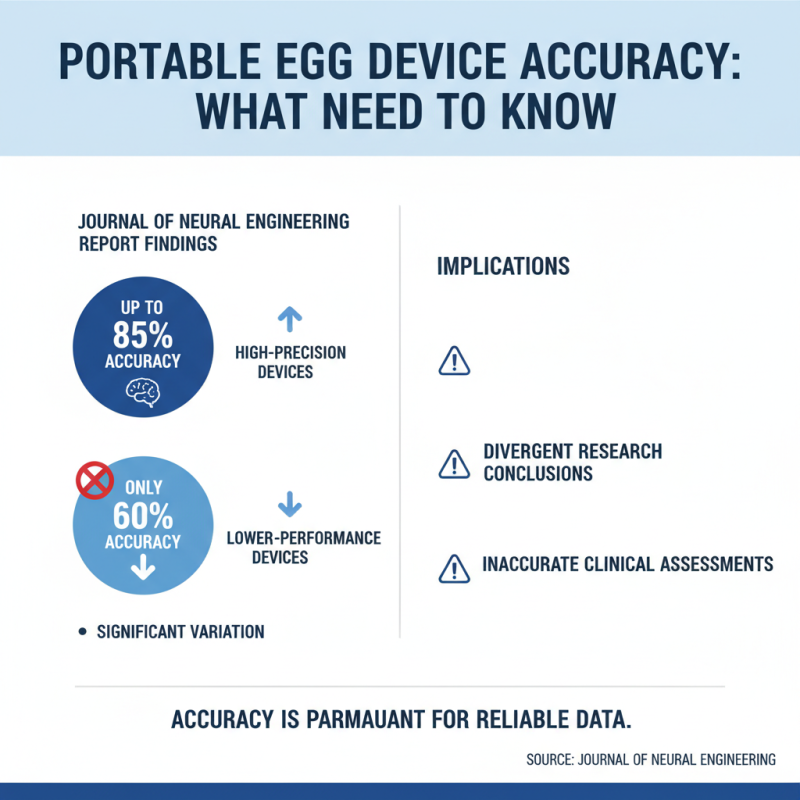
When evaluating portable EEG devices, accuracy is paramount. A comprehensive report by the Journal of Neural Engineering highlights that the precision of portable EEG sensors varies significantly. Some devices claim an accuracy of up to 85% in detecting brain activity, while others fall short, reaching only 60% in validation studies. These discrepancies can lead to divergent conclusions in research or clinical assessments.
It’s crucial to assess the specifications. Look for devices that offer a high signal-to-noise ratio. The Electroencephalography Society suggests that an SNR above 40 dB is ideal for effective data collection. Also, consider the number of channels; devices with more channels tend to provide richer data, capturing more brain activity patterns. Despite this, too many channels can lead to data overload without additional value.
User experience is another aspect to consider. Some designers overlook intuitive interfaces. This can hinder users from effectively interpreting results. Balancing complexity and usability is essential. Ultimately, the right choice often reflects personal needs and the specific context of use. Factors like portability and battery life also play significant roles in practical applications.
Assessing User Needs: Choosing Applications for EEG Devices
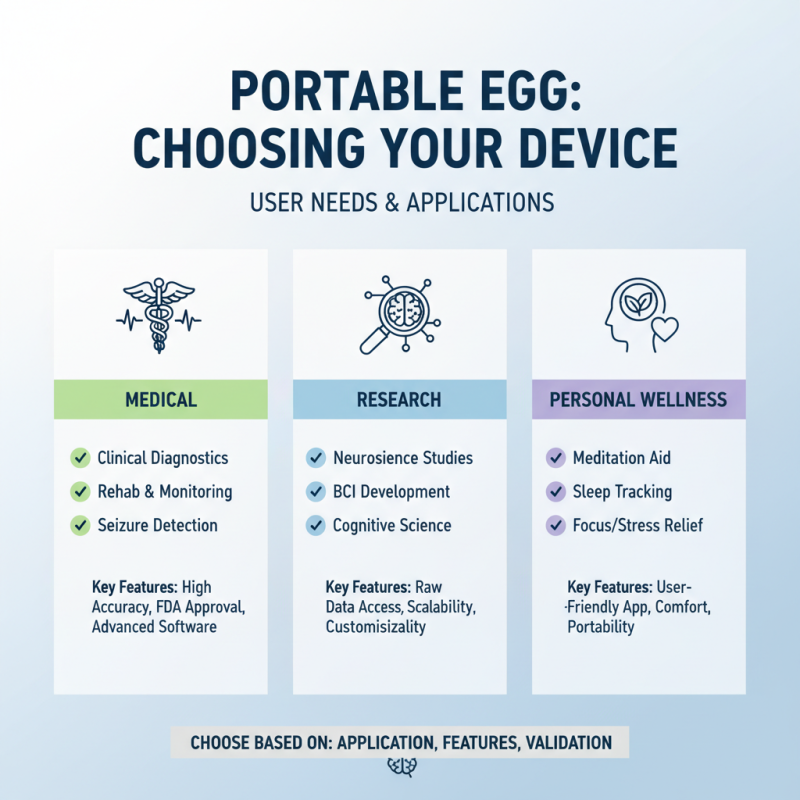
When selecting a portable EEG device, understanding user needs is vital. Different applications exist for EEG technology, and awareness of these can shape your choice. Some might want a device for medical purposes, while others could prefer it for research or personal wellness. Each application demands specific features and capabilities.
For medical use, accuracy and reliability are crucial. Users need devices that provide detailed data for analysis. If the goal is relaxation or meditation, the device should have a simple interface. Users may overlook how comfort affects usage. A device that feels cumbersome can lead to frustration.
Customization options also matter. Some may want real-time feedback, while others seek data for later analysis. Reflecting on what you truly need can prevent a mismatch. It's easy to get caught up in fancy specs, but it's more important to focus on how you intend to use the device. What satisfactions do you seek?
Analyzing Portability: Weight, Battery Life, and Usability Factors
When selecting a portable EEG device, several usability factors come into play. Weight is crucial for comfort and ease of use. Lightweight devices allow for longer sessions without fatigue. Look for options that weigh less than 500 grams. This makes it easier for users to carry and operate. A heavy device may lead to discomfort after extended use.
Battery life is equally important. Long-lasting batteries mean uninterrupted usage. Aim for devices that offer at least 8 hours of battery life. This allows for flexibility in usage. Short battery life can be frustrating and limits effectiveness.
Tips: Always check customer reviews for real-world battery performance. Sometimes manufacturers may exaggerate.
Usability also includes how intuitive the device is. A simple interface is more user-friendly. Users should navigate settings easily without feeling overwhelmed. Complex devices can discourage usage. It’s important to strike a balance between features and simplicity.
When considering these factors, reflect on your specific needs. Will you use it in various locations? Or will it mainly stay in one place? Your answers can guide your choice.
2026 How to Choose the Best Portable EEG Device? - Analyzing Portability: Weight, Battery Life, and Usability Factors
| Device Model |
Weight (grams) |
Battery Life (hours) |
Usability Rating (1-5) |
Ease of Use (1-5) |
| Model A |
250 |
8 |
4 |
5 |
| Model B |
180 |
10 |
5 |
4 |
| Model C |
300 |
6 |
3 |
3 |
| Model D |
220 |
12 |
5 |
5 |
Exploring Cost-Effectiveness: Price Range and Value for Performance
When looking for a portable EEG device, cost-effectiveness is crucial. The price range can vary significantly depending on features. Basic models might start around a few hundred dollars, while advanced options can exceed a thousand. Consider what you really need and what fits your budget.
Performance is key in choosing a device. A more expensive model may offer clearer readings or more features. However, not all high-priced devices guarantee better performance. Sometimes, a mid-range option provides adequate results. It’s essential to read user reviews and check for reliability. The wrong choice can lead to frustration and wasted money.
Many users report issues with battery life and connectivity. These factors can impact usability. A device that works well in theory might underperform in real life. It’s worth reflecting on what features matter most to you. Balancing cost and value is not always straightforward. Investigate thoroughly before making a decision.